The global landscape for LGBTQI+ individuals is deeply unequal. In many parts of the world, basic survival is a daily battle against state surveillance, institutional violence, and complete social erasure. Across the 57 member states of the Organisation of Islamic Cooperation (OIC), the lack of domestic data hides a stark reality: millions of people are living in environments that are actively hostile to their existence.
To understand where help is needed most, we must map the danger accurately. By analyzing state penal codes, enforcement records, and the presence or total absence of physical safety, we have mapped these nations based on the severity of the risks their citizens face.
The Scale of Hostility
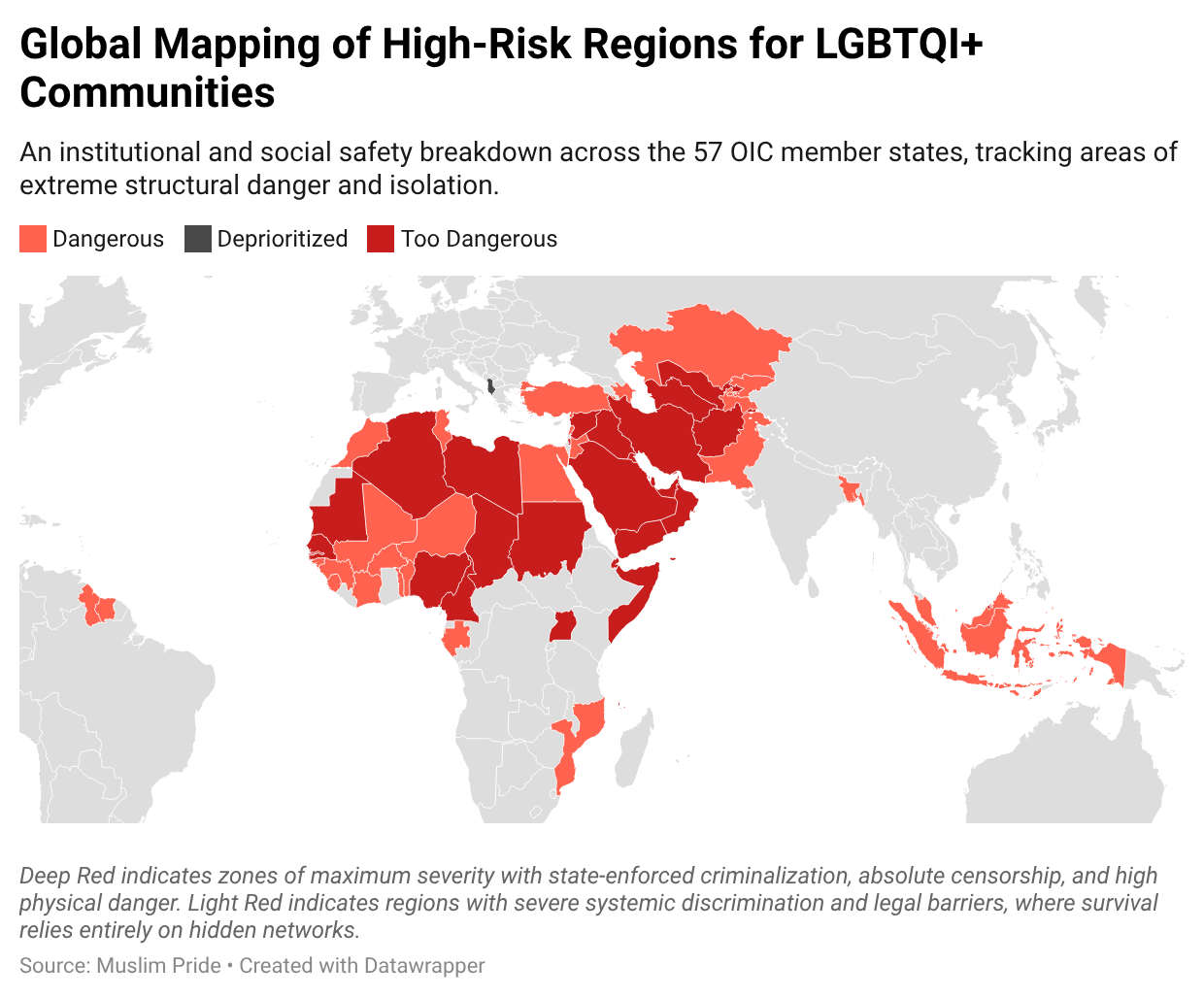
As shown in the interactive map below, the regions are divided by the level of institutional and physical threat:
- The Deep Red Zone (Maximum Risk): These are environments characterized by absolute legal prohibition, state-sponsored persecution, or capital punishment. In nations like Saudi Arabia, Iran, and Afghanistan, there are zero physical safe spaces, and any attempt to seek information locally carries immense personal peril.
- The Light Red Zone (Severe Systemic Barriers): In these countries, such as Malaysia, Egypt, or Pakistan, severe legal restrictions and deep societal discrimination remain the norm. While underground networks or small, highly resilient grassroots groups exist, the environment remains structurally unsafe for the vast majority of the population.
Why MuslimPride.org Focuses on the Highest-Risk Zones
This analysis explains the core strategy of MuslimPride.org. Because of the extreme violence, systemic discrimination, and absolute lack of local protection in these regions, our platform acts as a vital digital lifeline.
In countries with visible activist networks or legal advocacy frameworks, individuals can eventually find domestic paths to support. But for a queer person living in a Deep Red zone, local search results yield nothing but silence or state-monitored traps.
We concentrate our online infrastructure, secure hosting, and translations into 12 languages specifically on these unsafe zones. When physical spaces are entirely compromised by hostility and violence, secure digital sanctuaries must step in to fill the void. No matter how unsafe the immediate surroundings are, our platform ensures that life-saving resources remain accessible.
Leave a Reply